
B-Love’s
Guest House
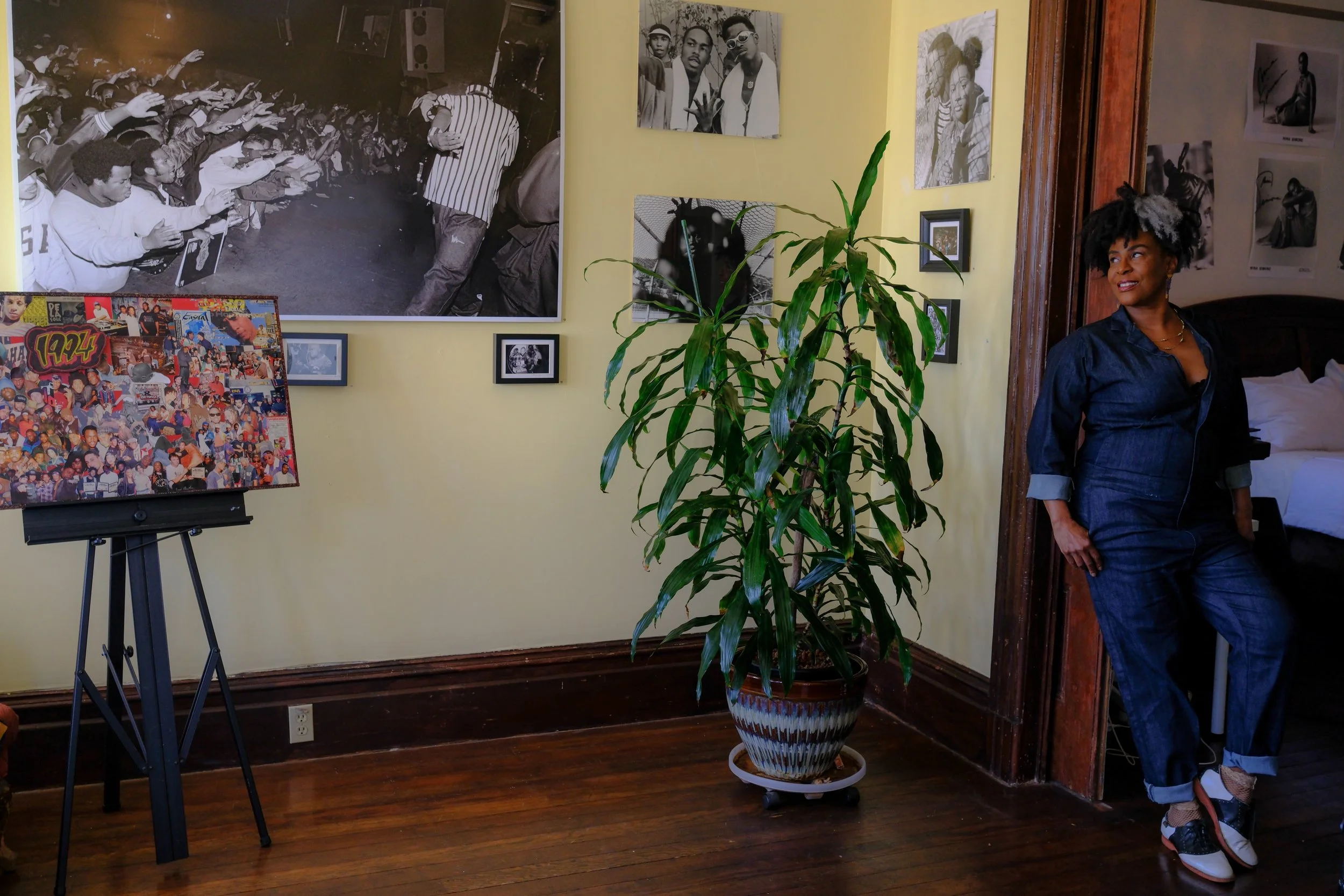
B-Love's Guesthouse : seed member spotlight Interview & Photography by : Adéniké AminAdéniké: Traci, I’m so happy to interview you. We’ve known each other for how long now?
Traci: Thank you, Adéniké, I’m so happy you are here. Wow.. I met you at Camp Akili in like 2005. So, what, 21 years? Wow.
Adenike: Damn! And here we are.
Traci: Here we are.
Adéniké: Your house in West Oakland is both your home and a cultural hub. It’s a Victorian guesthouse, gallery, and historical archive. How did that transition from personal space to public space happen, and what does it mean to you to anchor culture in this physical place?
Traci: I like this question because it's a really important part of the evolution of this business. Initially wanting a rental property, I looked for a property that had two units. This has the lower unit, and it has the living space on the second floor. So the lower unit was the rental unit. The second floor is where I lived upstairs with my family. It was hard to find a tenant in the lower unit because it has five bedrooms. So, I thought okay is it going to be five roommates who're going to be the lead and take care of the space? Was it going to be one big family? Was it going to be two small families? It could house so many, you know, different scenarios, and I was exploring who would want to rent this space. I didn't find a tenant as fast as I thought I would, you know, it's a nice space. It looks good, you know, I was like, Yeah, somebody's gonna want to be in this space. But when months were going by, and I wasn't securing a tenant, I got nervous. Then I had two friends who are choreographers who were coming to the Bay Area for a residency for three months, and that was the light bulb moment. I was like, Oh, I know so many artists and activists that come to the Bay Area for gigs, for direct actions, for festivals, for conferences.
And so I started staging the rooms, not only for the people that were coming for their residency, but I started offering the other rooms. So that's how it went from being a private to this public space. So for many years, the first floor was the guest house, and when my family dynamic upstairs shifted, I had more space available, so I extended the guest house to the second floor. And then I considered that it had more of the Victorian period design. I had those vaulted ceilings with picture molding. I'm like, Oh, my God, I already have a gallery.
I can create this space to present my work. And what's interesting is I've always shared my work in this unconventional way. Back in the day, I had a studio apartment, and I would put my art on the walls of the building. It was a fourplex, so there were four units in this particular part of the building, and so you walk in, the hallway is filled with my art, and my landlord allowed me to hang my art on the walls, going up the stairs to my apartment. This is just an extension of that. I would have people come over for birthday parties and events. I found the value in bringing the community together and sharing art.
Also, the backyard is big as hell. That's just how these Victorian houses are situated in this area. So with that big backyard, I was immediately inspired to tap into my heritage of black farmers and get to work back there and create this really dynamic space that honors the work of farmers and people that are connected to this plant species. Folks who know how to cultivate it and grow it and nurture it and commune with it in a way that enhances our well-being as humans. I love being in nature. I love how it grounds you. And so it just made sense that part of this offering would be a unique garden amenity. And it was very healing and empowering for me to just get in that soil.
A: The garden is so special.
Traci: Thank you, it is.
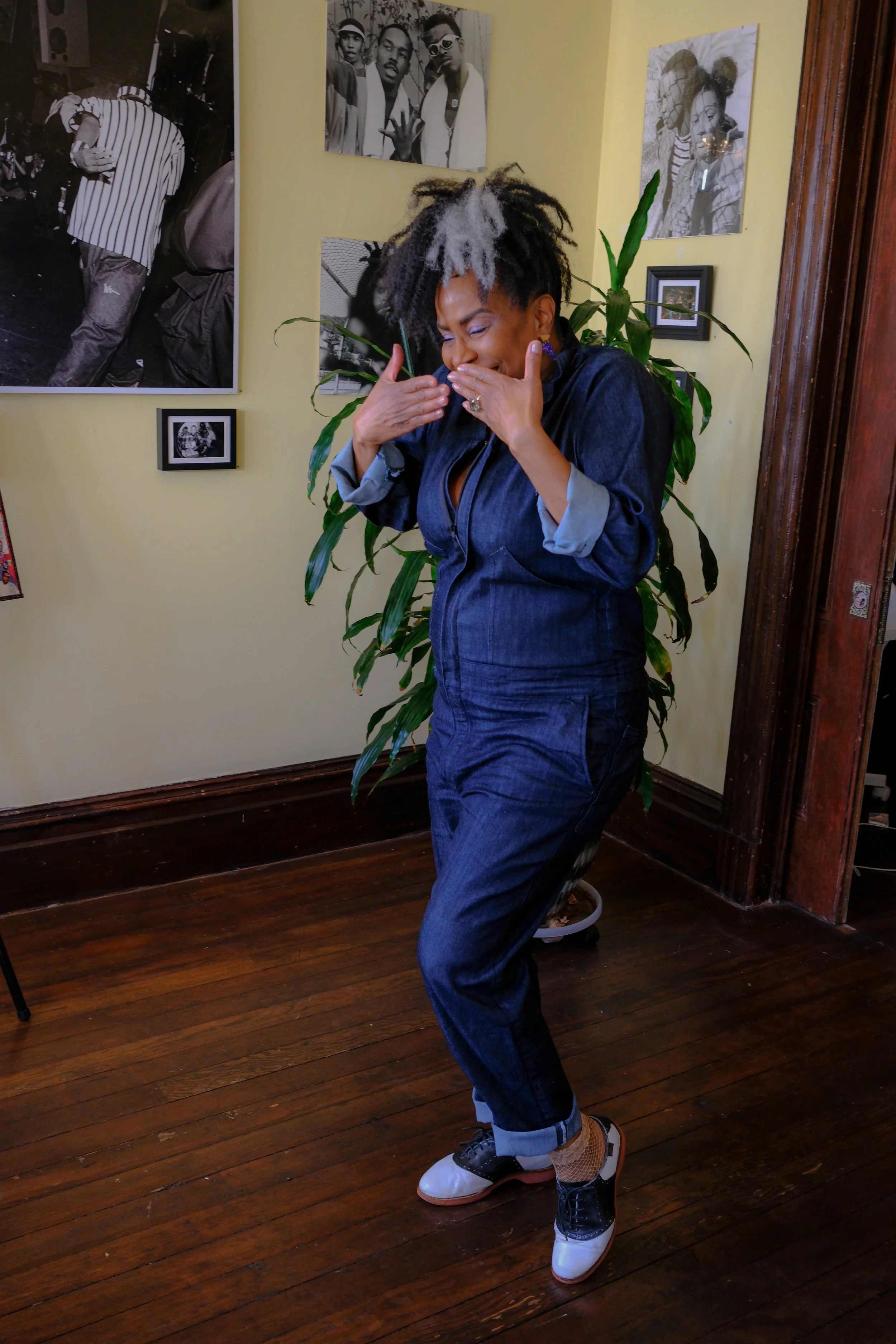
A: I met you as a dancer, but you’ve brought together dance, photography, hospitality, and storytelling throughout your life. Looking back, how did your early dance training from Oakland to Alvin Ailey in New York shape the way you see and capture culture now?
Traci: Leaving Oakland and moving to New York City was such an important part of my education. Studying at the Alvin Ailey school and with different dance companies in New York, with forces of nature, with Nanette Beard and contemporary dance theater, and then all the gigs I had and theater shows, you know, traveling to other countries. Those are all things that helped me to be on top of my game as a dancer, you know, the training and the choreography. To learn and perform…it was just, I loved it. It was exciting, and it was fun. It was very creatively fulfilling. Also, all of those companies that I worked with had a mission to preserve black culture. Alvin Ailey, he's like, I'm bringing dance to the people. Nanette Bearden, a contemporary dance theater, had a mission to preserve the work of great black choreographers. So we got to work with Tally Beatty and Diane McIntyre and George Faison, Mama Lu Parks, you know, like these are all people that have a very unique voice in black dance.
All of those choreographers are very different, but they're all similar in how they honor blackness. So I was learning to be black, black, blickety black, on the front, and on the back. It's helped me to understand that all of our stories are important because all of those choreographers I worked with, and even the teachers at the Ailey school, had a different voice in black expression. So, the way I capture culture now, as an example, with my photography archive, without any photography training, I was naturally compelled to tell the story of my people and to tell the story how I saw it.
A: Speaking of your photography, your new photography book, “Oakland Picture Lady: Tales of A 90s Girl” captures a moment of Bay Area hip-hop that many people only know through sound, but you captured its faces, spaces, and energy. What is it like for you to bring those images back into public view after so many years?
Traci: It's always exciting to be in a time capsule and to see these documents and these artifacts of how things were. So, having this book of life and hip-hop in the Bay Area in the 90s, it's that unique serving that sauce that people are really interested in now. Especially that 90s culture and fashion and music is all you know, something that's really popular now, people are excited to see the stories that these pictures tell. It’s time to give the people what they want.
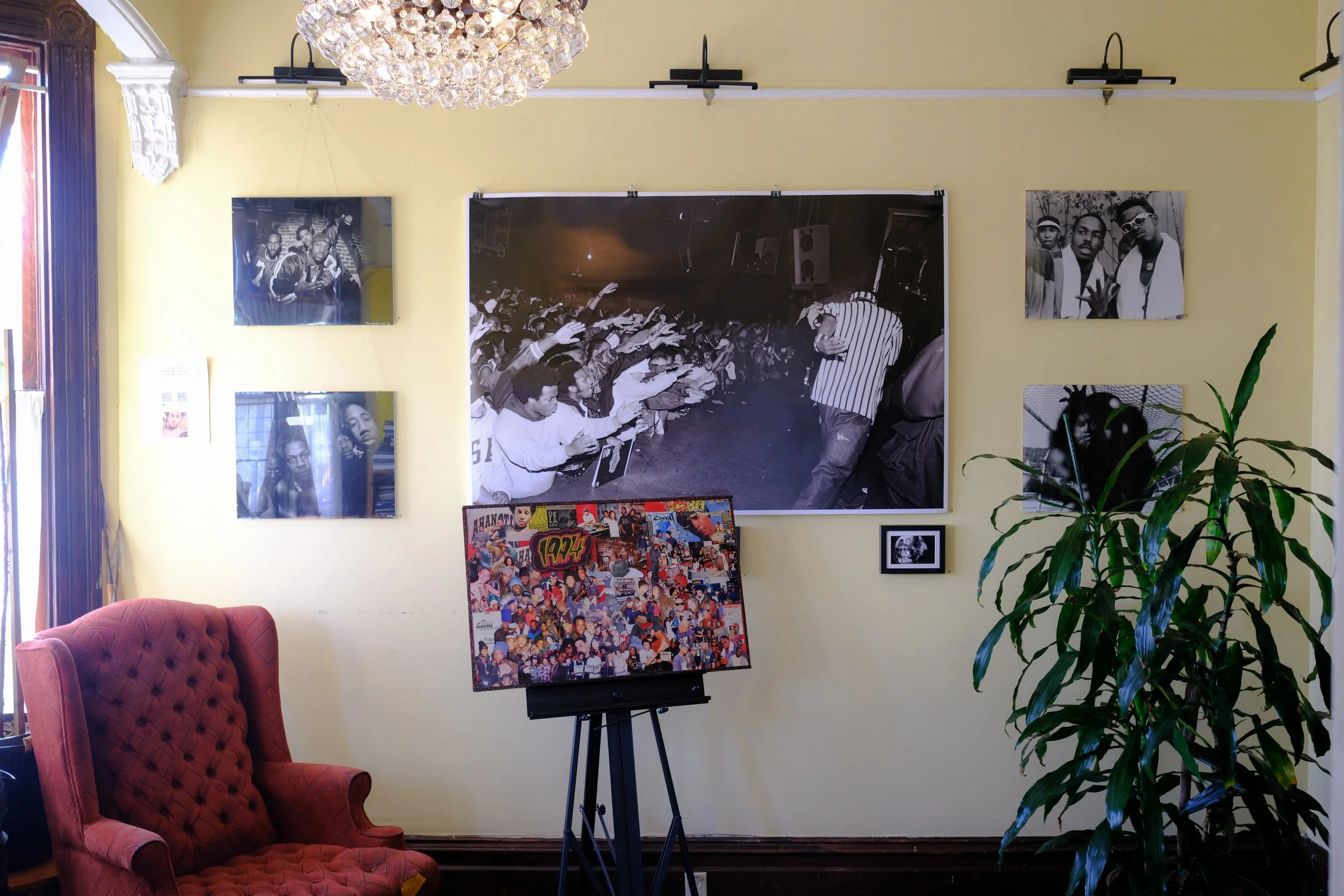
A: At B-Love’s Guesthouse, people can literally stay inside the history you’ve documented. Have you noticed how visitors respond when they see your photos on the walls, and what do people tell you they feel when they walk through this space?
Traci: Black folks, black folks especially resonate with the images. The images resonate with them, and they say, I'm looking at myself, because there are two parts of my 90s photography archive. One is my neighborhood images of you know my life in East Oakland in the 90s. These are street portraits of my neighbors.
Those are the images on the first floor of the guest house. So many people see themselves in it. I've had guests from Brazil look at the images and say, that reminds me of somebody in my life back home in Brazil. I've had one woman from Brazil say, "This is a Kiambo.” What does that mean? Kiambo? She says, “Kiambo, excuse me. Kiambo is a society of former enslaved Africans who escaped slavery in Brazil, and they created their own societies in the mountains, away from the colonizers, and they had thriving communities in the mountains.” And she said seeing my work reminds her of that. She said being in this space reminds her of the Kiambo. I've also had people from other cultures and other nationalities express gratitude that they are learning something, that they're seeing an element of culture that they haven't witnessed before, so they're getting a cultural education by seeing the images.
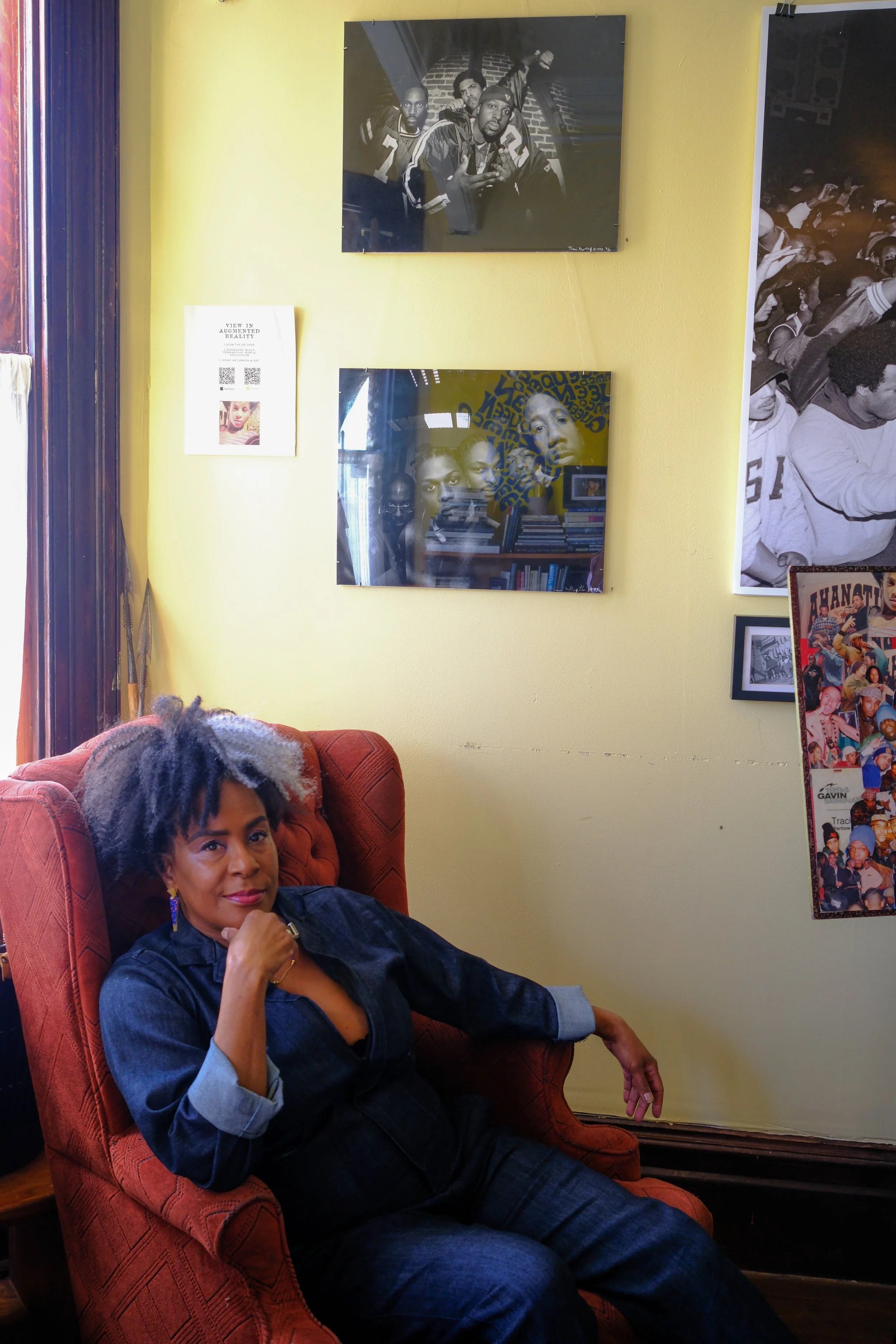
Traci: Important that that preservation happens in a space where it's being dissolved and being dismantled. It's a way of standing firm in who we are and unapologetically looking at this archive as how we existed in this space.
We may not be here as prevalent as we were, but we have a huge contribution, like there is a contribution to the energy and the vibration of this space and the culture, and these are the faces of the people who helped to create that. Preservation is so important in spaces that are heavily gentrified and beautiful.
A: I love that. I love that! So, that brings me to my next question. Part of your archive shows Oakland neighborhood life that many remember, like block parties, local crews, and community figures way before gentrification reshaped the Bay. How do you see your work functioning as a kind of living memory for Oakland?
.A: You’ve moved between so many worlds: the stage, the studio, the streets, and now hospitality and exhibition. What has stayed constant for you through all those chapters, and what surprises do you still find in your creative practice?
Traci: What stays constant is my love. I love to see people doing well, having a good time. I love people being cared for. I love people being seen and being heard, and I also like those things being reciprocated back to me. So it's an experience of love. The love of humanity, kindness, caring, and community. Creating things that sustain us. That love and that connection have stayed constant, whether it be through my dance, my photography, my hospitality, creating public events, and sharing my personal space.
Traci : You know, I don't know if it's important to include this in the article, but there are elements of this house that are my private space. So that's something that people also have to be aware of. That also has to be honored. It's not always easy doing all these different things. Whereas when I was younger, I had more energy and I had more focus. But as I mature, my body isn't as strong, you know, I don't have as much stamina. I've learned to approach my work and my body with deeper care and consideration. When I was younger, I thought I’d have the same energy to do these things that I love and that I enjoy. Of course, there is still love here and lots of passion, but the physical energy to give attention to all of these is a balance, and that was surprising, you know? Yeah, so it's just been about finding different ways of working to achieve those goals.
A: Two words. Salt bath.
A: Language matters when we talk about legacy. If you were describing the essence of B-Love’s Guesthouse, as a place, a community, and a cultural home, what words would you choose now that you didn’t have when you first started?
Traci: Right! Hahaha!
Traci: A soft place to land. Those are words for myself and the younger me, the me who has spearheaded this, and that has created all of these different things. I've had to make sure that I have a soft place to land, because I've created this for so many other people. Those are words that I now use often, like, oh, it's something that we all need, especially in this wild and uncertain time. In this dangerous time that we're living in, it's so important that we have a soft place to land. And that soft place could be someone to talk to, you know, someone who truly sees you. You know, a soft place to land doesn't necessarily mean a soft cozy bed, and yes, we do have cozy beds at the guesthouse, but a soft place to land could be inside your own heart.
Learn more about their work : 7000coils.com