
BAM House
Founder and Executive Creative Director, Dr. Ayodele Nzinga, has spent decades shaping Oakland's cultural integrity. From the Lower Bottom Playaz in West Oakland to the Black Arts Movement Business District Community Development Corporation, and now BAM House in the heart of downtown, Dr. Nzinga reflects on a life’s work at the intersection of theater and place-building spaces, and the communities that make them matter.
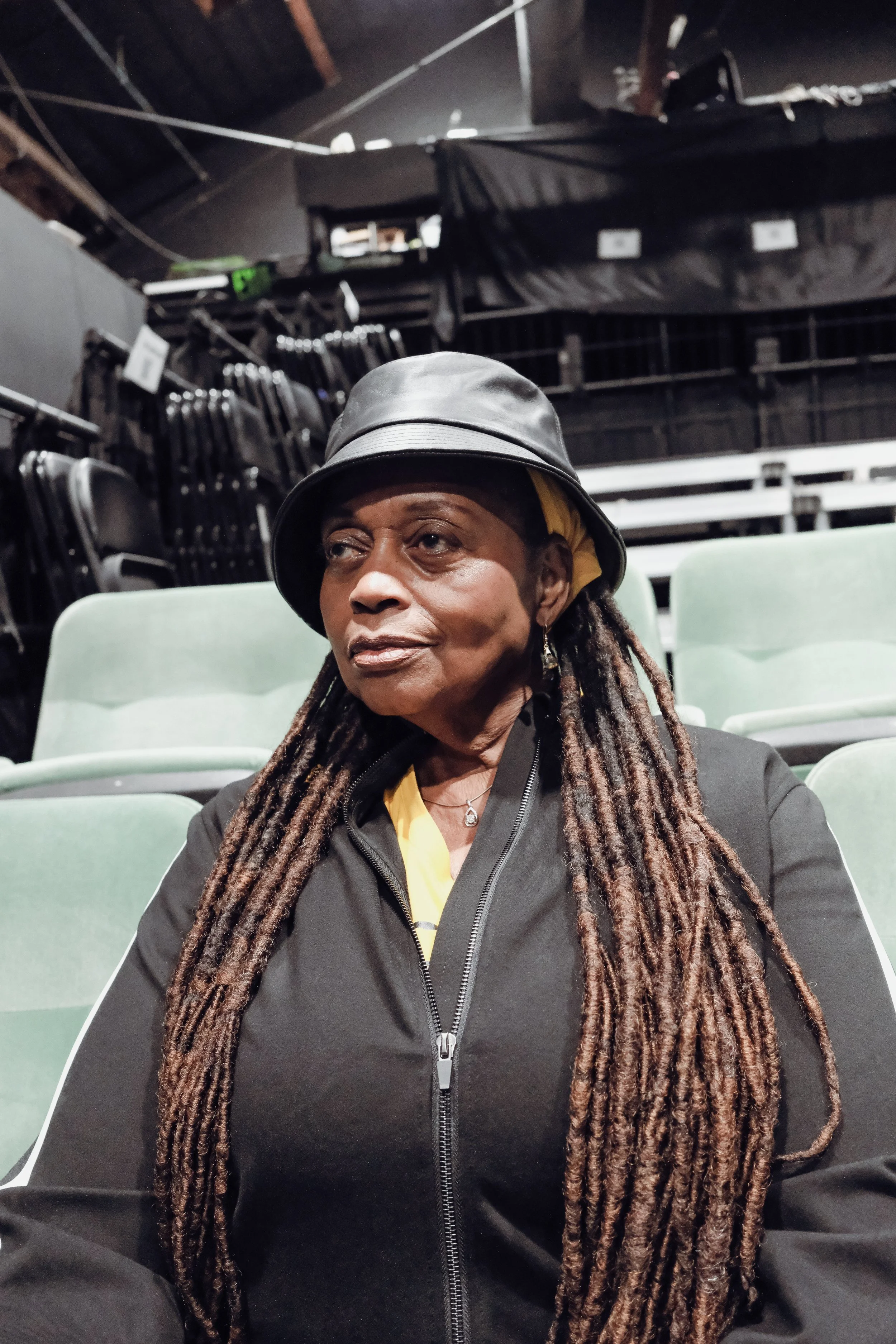
Bam House : seed member spotlight Interview & Photography by : Adéniké AminAdéniké: Dr. Nzinga, how has your understanding of home and belonging evolved as you expanded from creating theatre to now stewarding an entire cultural district in Oakland?
Ayodele: There's a word, Hiraeth, I believe. It's a Welsh word. It means an extreme longing for home. Even if that home doesn’t exist quite the same. I suffer from high Hiraeth.
West Oakland is my first home, the first place I ever lived on purpose. People normally don't live on purpose. It doesn't work that way. You live where your parents raised you. You live where you can afford the rent. You live where you can find a place that's big enough to take X number of people. You live where they accept your application. You live near your job, you live near your school. The idea of saying, I want to be and build in West Oakland, that is how I feel about belonging. West Oakland was never designed for residential living, really, but we were redlined into a place that remains semi-industrial to this day in terms of zoning. Where you can have things like Red Star yeast and be that close to the port and all of the other things that don't happen in Kensington or Piedmont or even Emeryville for that matter. These little places that get their own police departments.
The West is emblematic of every other red line, sundown, oppressed, surrounded by invisible political borders all across the world. You know, it's Joburg, this is Harlem. And it’s the first place I truly called home. So, finding a theater company, having a space built for us down in the bottoms, was a wonderful thing to be in residence there. We made a real place to belong, and we had the grace of an angel, but we didn't own the dirt. West Oakland and the lower bottoms in particular were ground zero for gentrification in Oakland. And so the theater went dark. Fast forward, as artists are being displaced, all kinds of artists that I've made art with for decades that no longer live here, the people who made the trek all the way back to the south to find a place to make home, some of them not making it, and some coming back. You know, the people who washed up to Sacramento, Fresno, Antioch, you know, it became a battlefield. That’s why I knew we had to declare the Black Arts District.
A: We’re sitting here at BAM House and this place most definitely leads that charge when I think of Black-led community theatre. What does it mean to you to provide a physical home for Oakland’s oldest Black theater company at a time when so many cultural spaces are displaced by gentrification?
Ayodele: We formed BAM House in 2016. CDC, Community Development Corporation, turns 10 years old this year. This district is 10 years old. As far as I know, you're sitting in the only space that's dedicated to celebrating this district. The story of staying in residence here is a long story. We were here when The Flight deck built this building out. And this was an old warehouse. They turned it into a theater. They couldn't hold on to the space, and then it went to another group. I'll give this second group credit for the fact that COVID hit.They didn't belong in this space. We were supposed to have the keys to this place. It should have come from the Flight Deck to us. There's a thing about people thinking you're not ready, you know, that you're smaller than you are, or that you should want less than you need or deserve at any given time. Sometimes, it's difficult even to be given the privilege of failing, which is actually how we learn. You know? So we ended up in possession of this space. And this space, boy, this space right here. This space is a blessing; this sacred space was destined. This place is impossibly expensive, and without this space, or a similar space, we can't do the work that we do. We are the only troop in the world, I said, the world that's ever done the entire August Wilson century cycle. And it happened here in Oakland.
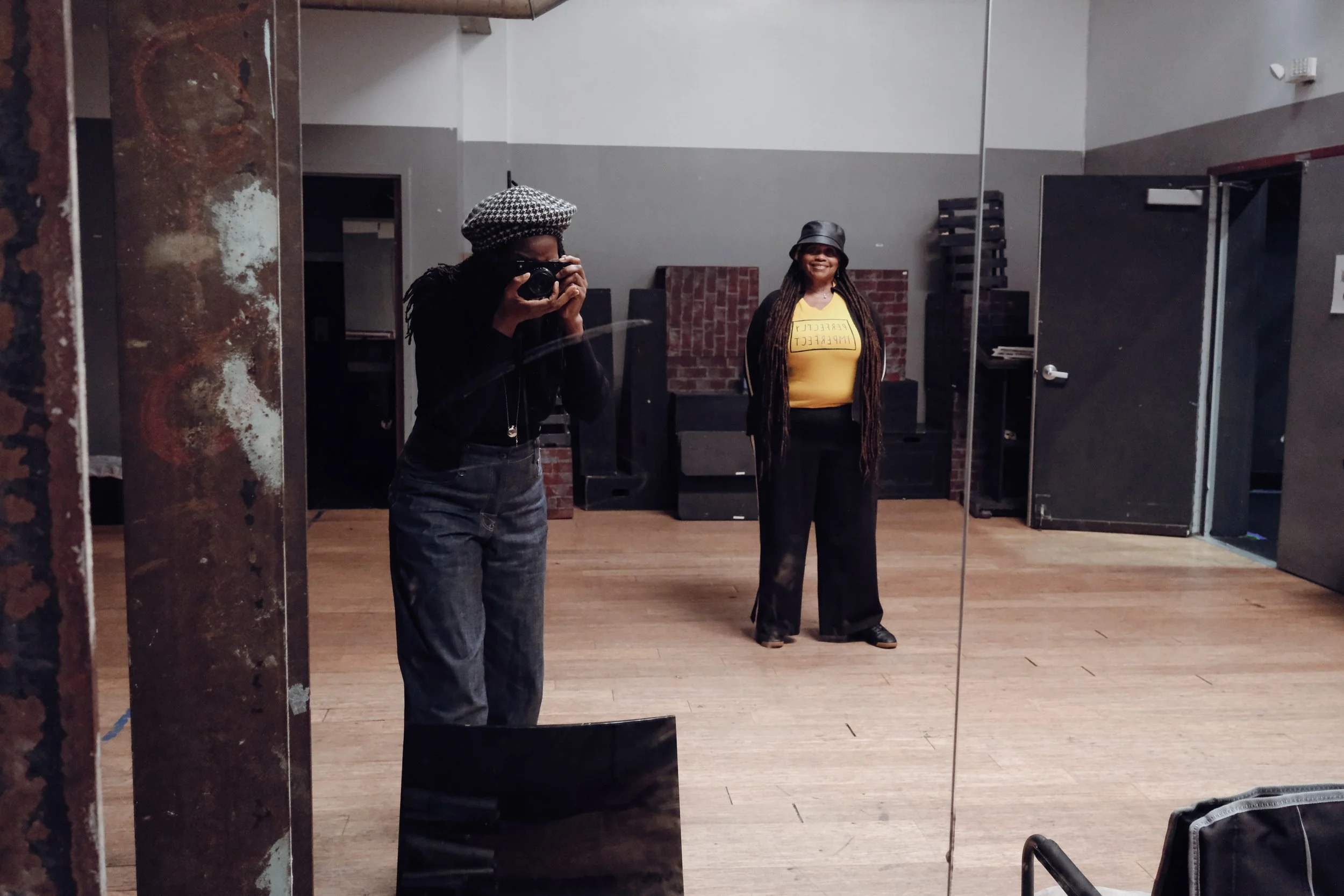
Ayodele: Vital human resources, we don't have access to enough of them. We try to make many partnerships with as many service providers as we can. And we're telling commuinty it's a good thing to give back. Give back a few hours of your time. Give up a little bit of your expertise. So that everyone has access to vital human resources. Archiving culture, of course, if you don't record and make a record of your story it disappears. Then it'll be told by other people, or you'll just disappear. You can exist 27 years in a city and if you don't tell your own story, then, two or three years from now, it might be like you were never in that city. No one of those pillars alone is gonna keep us in Oakland. We actually need all of those things to be healthy, safe, and reach a thriving state of being here in Oakland. Joy is an interesting thing to me. I think that, overall, there's an assumption that black people have to, like, conjure joy or bide at the corner store. Black people are some of the most joyful people I know! There's a general idea that we're in search of joy, that, you know, we have to make space but we are the joy. The complexity is understanding the restless nature of black existence within systems that aren't really built for you as the joy.
A: BAMBD CDC’s (Black Arts Movement Business District Community Development Corporation) work spans housing, human services, commerce, culture, and archiving. This intersectional approach resists compartmentalization. How do these different pillars inform one another in practice, and how do you hold that complexity while still making space for joy and celebration?
A: In your view, what is a story about Black Oakland that most needs telling?
Ayodele: One of my dancers lives in her grandmother's house in West Oakland. And there's a bunch conversations about whether they should sell it because of maintenance and stuff They're a younger generation. And so, there’s all this talk with them about why we need to be living here, you know? Yeah. I would tell those kinds of stories about West Oakland. I would tell you about the number of artists who thrived in those houses. And you asked about joy earlier, I’d tell the story about how we never suffered for culture. How we grew up, rooted in it, bathed in it, you know? Yep. I would tell those stories.
.A: As a cultural architect and a poet, you’ve often talked about creating rather than admitting to being broken. How does this philosophy shape the way you lead, especially in times of political and economic pressure?
Ayodele: That is so. I refuse to be broken, so when things get really bad, I make something. But I think that goes to that complexity that we talked about before, and to remind myself that even from the salt you can make sugar, you know? It’s hard to be broken if you’re building at the same time. It’s more like perhaps you’re shedding
In this moment, we should be less concerned with how we pray, how we dress, who lives where, who drives what, even food snobs, who eat what, and be able to understand a larger agenda.
It’s about building the plane while we fly it. We’ll each help figure out the parts we need, the role we each play, but the objective is to get it off the ground. And I understand that we are grieving, and the trauma goes covered up.
I have a saying: We go forward.
I’ve come to go forward.
You have to. But you also have to take time. To grieve and acknowledge the wounds created by the need to do this work. Sometimes you burn out, you lose the joy in the work. But if we’re the movement, then this too has to move. This grief has to be re-created to get the plane off the ground.
Ayodele: Cultural Sustainablility to me means Black Oakland creates its own new economies, with real barters and time trades, and we make an arts district that supports the citizens right here in Oakland with good living wages, care and more access to the arts. BAMBD CDC and Bam House came here knowing what we needed to do. We came to make home and belonging and leave Black spaces and culture for the next up. We all know the stories of how much our ancestors poured out to survive. So how can we fail? We never have. We always seem to go forward. We always seem to find what the fuck comes after z and we can’t stop now. We can't get caught in this conundrum called Amerikkk that won't let us see outside of the logic that has created all of our problems. So, sincerely from the bottom of my heart, having lead a theatre trope for the last 27 years, all of those relationships, having been the first one to actually sit down and anchor in the Black Culture District, the future generations will work for purpose, and don’t ask for permission.
A: What does cultural sustainability mean to you, and how do you hope future generations will carry the legacy of BAMBD CDC and BAM House forward?
Learn more about BAM HOUSE : https://www.bambdcdc.com/